

Polaris RZR Maintenance Schedule

There is a common misconception that UTVs require minimal maintenance. Granted, the average UTV is likely to function for its first six months to a year with a bare-bones maintenance approach.
There’s no sense taking an unnecessary risk when maintenance guidance is available. If you own a Polaris RZR or are considering buying one, prioritize routine upkeep. Sufficient maintenance enhances both the useful life and safety of your ride.
Maintain your Polaris RZR, and you’ll also find it performs that much better on the trails.
Here’s how to do it.
Pre-Ride Maintenance Checklist
Take a moment to check your Polaris RZR before joyriding off the beaten path
Like every UTV-lover, you want to hop on your four-wheeler and start exploring right away. Resist the temptation, spending at least a couple minutes analyzing your Polaris RZR.
Conduct a visual scan of the vehicle before hitting the trails. Check the tires for signs of damage. Make sure these “feet” of the vehicle have sufficient inflation.
Test the brakes and lights for functionality. Give the oil fluid level a check, especially if you plan on heading out for a long day of trail riding.
If you’ve added any Polaris RZR accessories and parts, double-check them now and then before hitting the backwoods. Though most such add-ons are built with posterity in mind, there’s no harm in giving them a once-over during your pre-ride inspections.
Break-In Period Maintenance
Pay close attention to these subtleties after buying your Polaris RZR
Maintenance is often overlooked in the initial months of riding simply because there is an assumption that the vehicle will function without flaw. After all, new UTVs tend to perform at a high level, as there hasn’t been a chance for wear and tear.
Pay close attention to your UTV during the first 20 hours of operation. Treat the vehicle carefully during this initial period, and you’ll maximize its performance and lifespan.
Be aware that excessive heat during the first hours of operation is a threat to the engine. Such heat can damage engine parts. Therefore, it is in your interest to avoid driving at high speeds or full throttle.
Take a look at the transmission once you hit the 25-hour benchmark. If you notice wear, tear, damage, or other visible issues, ask a professional for help.
Moreover, be mindful of the oil, choosing that recommended in the vehicle’s owner’s manual when you reach the 25-hour mark or first month of driving, whichever comes first. Continue to follow the manual’s specifics for new owner driving and operation procedures moving forward.
Try your best to apply light pressure to the brakes during the break-in period. If you tow anything during this time, make sure it is a light load.
Though difficult, try to remember to vary the throttle position. Driving at a sustained idle is not recommended until you are beyond the break-in period.
Seasonal or Annual Maintenance
Focus on these maintenance essentials at least once every season or year
Ongoing maintenance keeps your UTV in tip-top shape, helping it function as designed. Give the brakes a look once every season, or at the bare minimum, once per year. Remove the tires and the brake pads for in-depth analysis.
Take a look at the thickness of the pads to determine if they are thin. Moreover, if you notice the brake pads don’t function as they should or squeak, replace them with high-quality pads.
While you are down there, check the wheel bearings for signs of cracks, corrosion, rust, leaking grease, or other damage.
Examine the air filter at least once a year or even once per season. If you notice debris has built up on the filter or signs of damage, replace it. Even dirt on the filter will prevent air from moving to the engine and compromise fuel efficiency.
Be mindful of the spark plug. If the engine struggles to start, loses power, or misfires, the spark plug might be the issue.
Take a look at the spark plug for the following:
- Damage
- Contamination
- Buildup of carbon
- Corrosion
If replacement is necessary, check the owner’s manual for spark plug details, including its size specifications.
Take a look at the drive belt every couple of months, taking note of the following:
- Missing cogs
- Glazing
- Cracking
- Fraying
Such issues will cause power dips and slippage. Damaged drive belts also have the potential to break, meaning you’ll be rendered isolated at your point of breakdown.
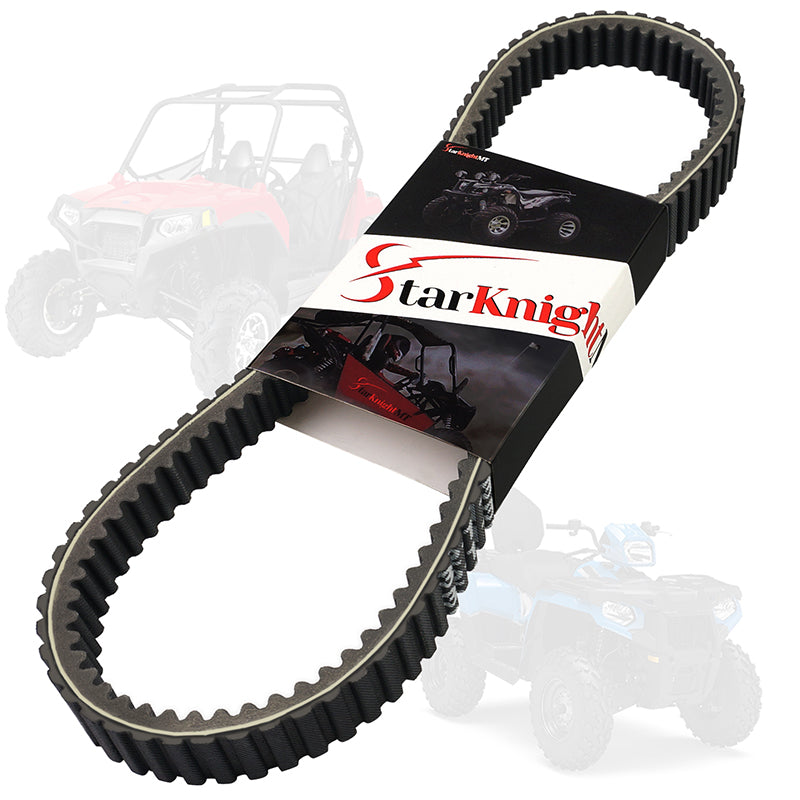
Ideally, the belt will be replaced prior to the point that it breaks. If replacement is necessary, upgrade your belt to one that is high-performance, durable, and heavy-duty.
Check your RZR’s radiator coolant when the engine has been off for at least an hour. Remove the engine hood to get a sense of the coolant level within the overflow bottle. If the level is low, add coolant right away.
Sufficient battery juice is necessary for safe joyrides. Use a battery tester to gauge the power. Ideally, you’ll keep a portable battery charger on board at all times.
Mark your calendar for an annual transmission fluid check. Here’s how to do it:
- Turn on the RZR engine, allowing it to warm up
- Remove the dipstick to gauge the transmission fluid
- Wipe the stick, then put it back in place
- Remove the stick once again to gauge the level against the dipstick’s mark
If you notice the transmission fluid is low or discolored, refer to the vehicle owner’s manual for replacement guidance.
Annual Polaris RZR maintenance includes clutch analysis. A clutch check once per year or even seasonally provides invaluable peace of mind. Pay close attention to signs of damage and wear to ensure the clutch can engage/disengage as designed.
Maintenance Tips & Best Practices
The right approach to Polaris RZR maintenance keeps your UTV functional throughout the entirety of the year
When in doubt, err on the side of over-maintaining your Polaris RZR rather than under-maintaining it. If you wait too long to maintain the vehicle, its performance will inevitably decline.
Add monthly maintenance to your calendar, and you’ll have the confidence necessary to fire up your RZR every time you venture out to distant trails. Keep in mind, each unique Polaris requires unique maintenance at specific times, so be sure to adhere to the maintenance schedule recommended for your model.
Above all, don’t forget why you are maintaining your ride: fun!
Outdoor adventures are that much more enjoyable with StarKnightMT accessories that enhance Polaris RZR function and form for maximum fun.
Tips & Conclusion
Ongoing Polaris RZR maintenance keeps your UTV in tip-top shape
Regardless of the specific Polaris UTV you choose, its performance will be shaped by maintenance. If you encounter a problem while checking or maintaining your UTV, ask the experts for help.
A trusted UTV mechanic will ease your maintenance concerns, perform necessary repairs, and get you back out onto the trails with peace of mind.
FAQs
Q1: Does Polaris RZR engine oil really matter?
A1: Yes. The engine oil is the lifeblood of your RZR. If the oil is old, dirty, or otherwise compromised, the engine will not function as it should. Check the oil level once per season. Some check their oil before every outdoor adventure. When in doubt, adhere to the vehicle user manual’s guidance for replacing the oil and oil filter to prevent significant damage.
Q2: What about front differential oil?
A2: Front differential oil helps ensure the front differential is in solid working condition. If the front differential oil is compromised, the UTV will be unsafe and also fail to handle properly. Refer to the user manual for guidance governing front differential oil changes. If you wait too long, the old oil will cause overheating, grinding, and damage to the point that the differential might fail.
Q3: What should I do if I encounter challenges while attempting to maintain my Polaris RZR?
A3: Instead of attempting a DIY (do-it-yourself) repair or maintenance alteration, be smart. If there is even slight concern or hesitation about how to maintain the UTV, reach out to a Polaris RZR maintenance professional for professional assistance.
Q4: Can I maintain the emission system on my own?
A4: It is not recommended. If you are considering maintenance of the emissions or a related system, take the vehicle to a professional.


Leave a comment