

John Deere Gator Top Speed: What You Need to Know

Though it’s hard to think of someone who would buy a John Deere Gator to win a race, that doesn’t mean people who buy them shouldn’t consider speed. Whether you're hauling supplies across a job site or trying to keep up on the trail, having a good idea of what kind of top-end performance your Gator can offer can come in handy.
Some models are built for pure utility, while others lean more into recreation. The difference in speed between these different models might surprise you.
In this guide, we’ll take a deeper look at the top speeds by model, explain more in-depth what factors affect performance, and explore a few ways to get a bit more power in your miles per hour. Of course, we’ll also look at a few safety and legal considerations to keep in mind, so you know what you’re getting into before you start modifying anything.
Overview of the John Deere Gator Lineup
There are three main categories in the John Deere Gator lineup, including the Work Series, Crossover XUVs, and the High-Performance RSX Series. Each is built with a different purpose in mind, which plays a big role in how fast they can go.
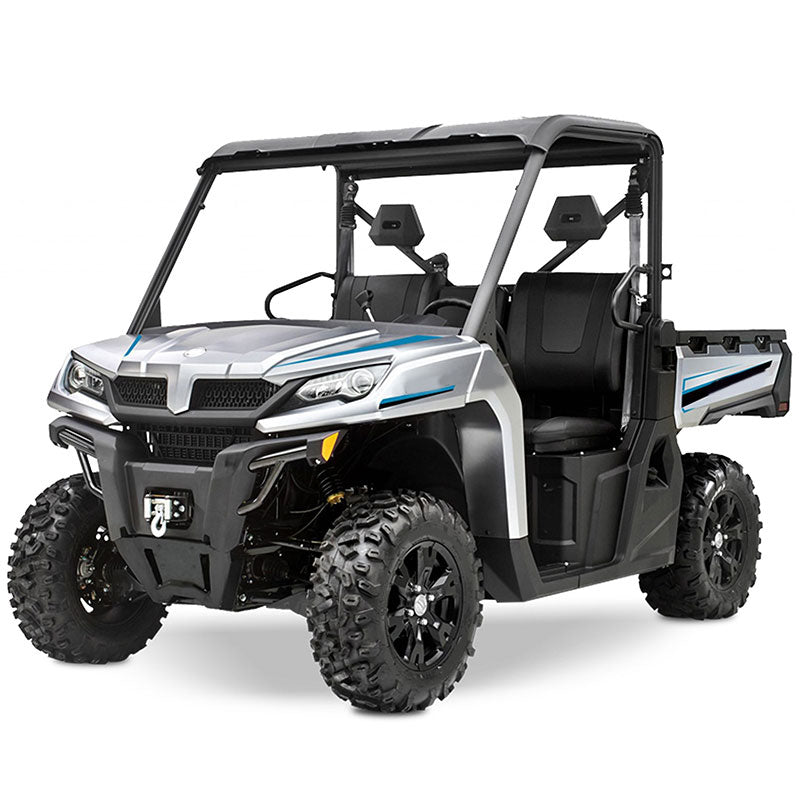
The Work Series models, which include the HPX, TE, TS, and TX, are designed for hauling, towing, and tackling daily tasks around farms, ranches, and job sites. They’re not that quick, but they’re tough and dependable. Most of them have smaller engines like V-twins or electric motors that are more torque-heavy than they are fast.
Crossover XUVs bridge the gap between utility and recreation. Mid-size models like the 560E are better for tight trails and lighter tasks, while full-size versions like the 590M and 835R are more powerful and comfortable, especially on longer rides. These rigs usually have beefier engines like 586cc or 812cc options, which makes them noticeably faster and better performing.
At the top of the food chain is the RSX Series, which includes the 850i and 860i models. These are sport-focused machines made for fun, with performance tuning, better suspension, and responsive handling. In terms of John Deere Gators, these are the fastest models the company has ever built, powered by high-revving, fuel-injected engines.
Top Speeds by Model
From top to bottom, speed is a whole different ballgame depending on what John Deere Gator model you get your hands on. Here’s a breakdown of what you can expect from each category, based on real-world performance.
Work Series Models
If you're running a Gator strictly for utility, you're probably going to get one from the Work Series. These models were made specifically to carry heavy loads and tow gear, not win races.
● TE 4x2 Electric: Tops out at around 15 MPH. While it’s a snail-paced UTV compared to most, it’s great for quiet operation on flat ground. Plus, it’s super efficient and low-maintenance.
● TS & TX 4x2: These gas-powered models push about 20 MPH with their small V-twin engines and low center of gravity. We’d recommend them more for light-duty farm work or campus use than racing.
● HPX: The HPX is one of the more capable work models, reaching about 25 MPH. It has more torque and better suspension than the previous two, which is why you’ll often find it on rougher job sites.
Crossover XUV Models
These XUV Gators hit a nice middle ground between tasks and trails, with top speeds that exceed those of the Work Series models.
● XUV 550 & 560E: These two models top out around 28 MPH. Under the hood, you’ll find V-twin Briggs engines and modest horsepower. While they’re both incredibly reliable pieces of equipment, there’s definitely a limitation when it comes to speed.
● XUV 590E / 590M: A significant jump, these models can hit 45–48 MPH thanks to larger 586cc engines. We recommend them for folks who want utility and excitement.
● 825i, 835R, 855D, 865M: Great for longer days and heavier loads. You can expect top speeds around 50 MPH, thanks to the 812cc and 839cc engines. Compared to their other XUV counterparts, they're smoother, quieter, and more comfortable on long runs.
RSX Series
If you’re serious about topping out your speed, look no further than the RSX Series.
● RSX 850i / RSX 860i: These performance-driven models can push 60 MPH under the right conditions. Built with recreational use in mind, they feature multi-link suspension, tighter steering, and more responsive throttle mapping.
Factors Affecting Top Speed
Even if you’re driving the fastest model in the Gator lineup, you won’t always hit its advertised top speed. This is because real-world performance depends on a handful of variables.
Terrain plays a huge role in how fast you can push any vehicle. Pavement and packed dirt will naturally give you the best shot at full throttle. But once you’re in sand, mud, or hilly ground, don’t expect top-end numbers. Traction and grade kill speed fast.
Load weight also plays an important role. The more cargo and passengers you have onboard, the more drag you’re going to get. If you’re hauling a full bed of tools or towing something behind you, there’s no doubt you’ll feel the difference in how quickly you get up to speed, or whether you get there at all.
Then, we have tire size and pressure. While bigger tires might look cool, they can cut down on your top speed by changing your gear ratio. If you’re doing some serious off-roading, you might want to lower your tire pressure to improve your grip. Just know that doing so will also eat into your speed.
Belt and clutch condition is another big one. If your belt’s worn or your clutch is slipping, it can hurt your torque and acceleration. You might not notice at lower speeds, but once you start trying to open your engine up, you’ll feel it.
Lastly, don’t forget elevation and wind resistance. Higher altitudes mean thinner air and less engine power. And something as simple as a windshield or roof can create enough drag to knock a few MPH off your top end.
Legal and Safety Considerations
It’s worth noting that most John Deere Gators aren’t street legal, which means whatever speed you’re hitting, it’s happening off-road. That’s fine for trails and job sites, but once you start pushing the limits of what they’re capable of in more public settings, you start taking risks.
At higher speeds, even the smallest bumps in the road can throw off your handling. This is especially true if you have extra gear or passengers in the car. You’ll want to make sure your loads are secured, weight is balanced, and everyone’s wearing proper protection, including helmets if you’re on a gnarlier trail.
If you’re thinking about tuning your rig for more speed, just know that adding ECU mods or removing limiters can void your warranty and might land you in hot water depending on your state’s emissions rules. Look into your local regulations and consider any of the tradeoffs your performance upgrades might come with.
Final Thoughts
While John Deere Gators aren’t taking home any trophies for speed, they might surprise you with the right setup.
If you want more top-end out of your Gator, go for one in the RSX series. Otherwise, a tuned 590 can hold its own with the right tweaks.
Be sure to check out our wide range of accessories here at StarknightMT.
At the end of the day, it’s about what you need. Some riders want speed; others want pulling power. Build your Gator for the way you ride—and keep safety in the mix no matter what.
FAQs
Q1: What’s the fastest stock John Deere Gator?
A1: The RSX 850i and RSX 860i are the fastest stock models in the lineup, topping out around 60 MPH.
Q2: Can I increase my Gator’s top speed?
A2: Yes. With some simple ECU tuning and clutch upgrades, you can get more speed out of your Gator. Just be mindful of your warranty and local laws.
Q3: Will bigger tires make my Gator faster?
A3: Not usually. Larger tires can lower your effective gear ratio, which can reduce your top speed.


Leave a comment