

How to Locate Your UTV’s VIN

Introduction
If you own a Utility Task Vehicle (UTV), chances are you’ve already heard of the term VIN—short for Vehicle Identification Number. However, you might not know precisely what it is, where to locate it, or why it matters if you're new to off-roading or are just getting to know how it works.
A VIN is essentially your UTV’s fingerprint—a unique 17-character code made up of letters and numbers that identifies your specific vehicle. No two are alike, and that makes it critical for all sorts of situations:
- Registration and insurance: Your VIN is required to legally register your UTV and get it insured.
- Service and maintenance: Mechanics often check the VIN to ensure part compatibility.
- Parts ordering: Many aftermarket and OEM parts are VIN-specific, assuring a proper fit.
- Theft recovery: VINs help law enforcement track down and recover stolen automobiles.
Knowing where to locate the VIN can help you save time and stress while registering your UTV, purchasing parts, or verifying ownership. The tricky part? VIN plates and stamps are not usually in the same location on each vehicle. In this article, we'll go over the most popular areas to search, how to detect the number, and what to do if it's still hidden.
For all your UTV and ATV part needs, including those that are VIN-specific, explore the full selection at StarknightMT Aftermarket UTV/ATV Parts and Accessories.
Common VIN Locations on a UTV
Manufacturers have a few standard spots where they place VINs, but the exact location can vary by brand, year, and model. Here are the most common areas to check:
A. Frame and Chassis
The frame is one of the most trustworthy locations to begin looking. Manufacturers frequently stamp the VIN on the metal frame near the front or rear wheel. Many UTVs have this:
- On the driver's side of the frame, usually around the bottom half.
- On a metal plate welded to the chassis.
- Near the front suspension or at the rear axle.
This site is popular because it is long-lasting and difficult to tamper with, making it an ideal choice for a permanent identification.
B. Under the Seat or Floorboard
Another popular location is beneath the driver's seat. Many manufacturers insert a sticker or plate beneath the seat or floorboard region to make access simpler than with a stamped frame. This placement is especially common in models where the frame might be harder to inspect.
If your UTV has removable seats, simply pop out the driver’s seat and look along the frame rails or floor panel.
C. Near the Engine or Engine Compartment
Because the engine is an integral part of the vehicle, some manufacturers stamp the VIN directly on or near the engine block. You may locate it:
- On the engine casing.
- On the frame crossmember near the engine.
- Next to the coolant or oil refill area.
This can sometimes be mistaken for the engine serial number, so be sure you're reading the entire VIN, not just the engine ID.
D. Dash or Steering Column Area
On certain models, especially newer ones, the VIN may be placed in the cockpit area. Look near:
- The steering wheel column.
- The dashboard panel.
- Along the inside edge of the driver’s side door opening (for side-by-sides with enclosed cabs).
This is often a convenient spot since it’s easy to see without lifting seats or crawling under the UTV.
E. Manufacturer-Specific Placements
The VIN is typically placed in slightly different locations by each brand:
- Yamaha: Usually found on the frame next to the left wheel or under the driver's seat;
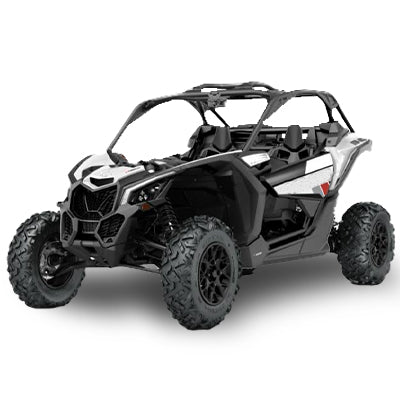
- Can-Am: Usually marked on the front frame rail or displayed on a plate near the driver's side wheel;
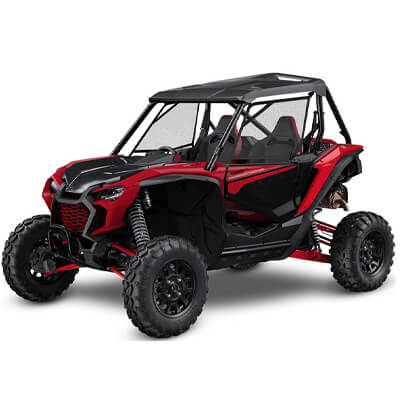
- Honda: Usually found on the front or rear frame cross-member;
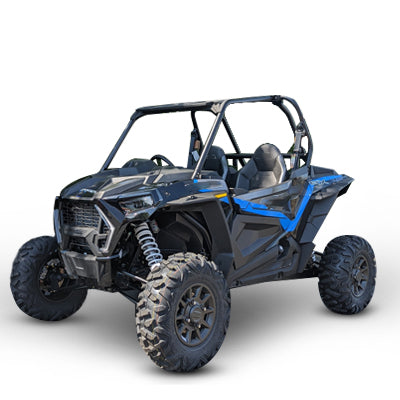
- Polaris: Usually stamped on the driver's side frame rail, either by the front or rear wheel well.
If you know your UTV brand, you can often narrow down the search based on these tendencies.
How to Identify the VIN
Finding a number stamped or printed on your UTV is one thing—making sure it’s the VIN is another. Here’s how to tell:
- Format: A VIN is always a 17-character code made up of letters and numbers. It does not contain the letters I, O, or Q (to avoid confusion with 1 and 0).
-
Sections: The VIN is broken into parts that provide information about your UTV:
- Characters 1–3: World Manufacturer Identifier (country, brand, type).
- Characters 4–8: Vehicle descriptors (engine type, body style, etc.).
- Character 9: Check digits for authenticity.
- Characters 10–17: Vehicle identifier (year, plant, production number).
Serial Numbers vs. VINs: Some UTVs also have an engine serial number or frame number. These are not the same as the VIN, although they may look similar. A true VIN will always be 17 characters.
Tips for Hard-to-Read VINs
1. Clean the area: Dirt, mud, and rust often cover up VIN plates. Use a rag and some mild cleaner.
2. Use a flashlight: Shadows can obscure the stamping—good lighting makes a big difference.
3. Take a photo: Sometimes zooming in on a smartphone photo makes faint characters easier to read.
What to Do if You Can’t Find the VIN
If you’ve checked all the common spots and still can’t locate your VIN, don’t panic. There are a few reliable backup methods:
Check the Owner’s Manual
Most UTV manuals list the VIN location, and some even print the VIN directly on the front pages.
Look at Paperwork
The VIN will always be recorded on your title, registration, and insurance documents. If you’ve purchased the UTV new or secondhand, it should also appear on the bill of sale.
Contact the Dealer or Manufacturer
If you're still stumped, contact your dealer. Provide them with the make, model, and year, and they will assist you. Manufacturers may be able to validate the VIN location depending on your unit's specifications.
Check for Tampering
In rare cases, a missing or damaged VIN plate could be a sign of tampering. If you suspect this, it’s best to contact your dealer or local law enforcement to verify authenticity.
Conclusion
Your UTV's VIN may appear to be a simple string of letters and numbers, but it is critical for ownership, maintenance, and security. In most cases, it is stamped on the frame or chassis, printed on a plate beneath the seat or floorboard, mounted on the dash or steering column, or put in brand-specific locations that differ across manufacturers such as Polaris, Can-Am, Honda, and Yamaha.
Once you find it, be sure to write it down and keep it in a safe place. Having it handy makes ordering parts, filing paperwork, and protecting your machine from theft much easier.
Finding your VIN doesn’t need to be a hassle—this guide walks you through where to look, how to identify it, and what to do if it’s not obvious. Next time you’re filling out forms or shopping for accessories, you’ll be glad you tracked it down.
FAQ
A1: A VIN isn’t secret, but it’s a unique ID for your vehicle. It’s visible on the car and paperwork and used for tracking recalls, service, and ownership. While safe to share with dealers or insurers, avoid posting it publicly since scammers could misuse it.
Q2: What to do if your UTV is stolen?
A2: If your UTV is stolen, report it to the police right away with the VIN and details, then notify your insurance company. Keep an eye on online marketplaces, alert local dealers and shops, and spread the word through riding groups or social media to boost the chances of recovery.


Leave a comment