
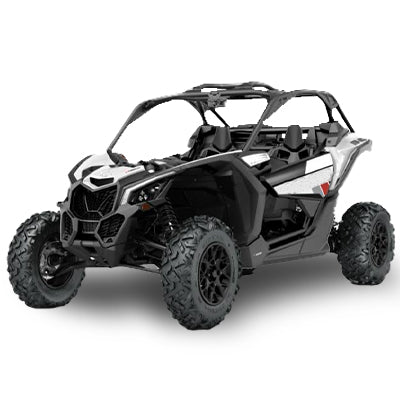
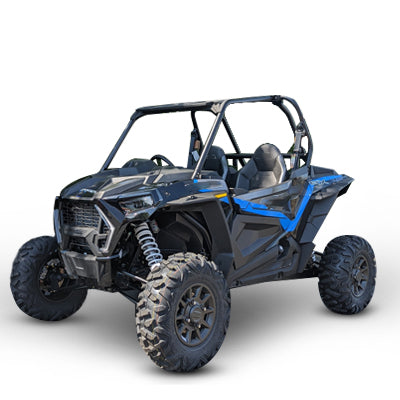
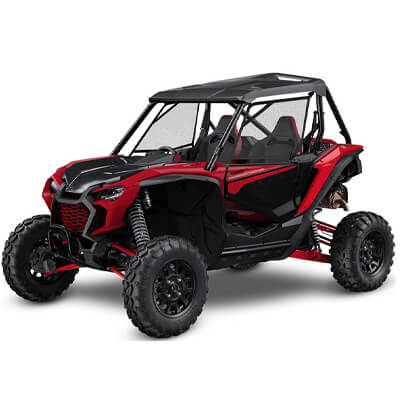
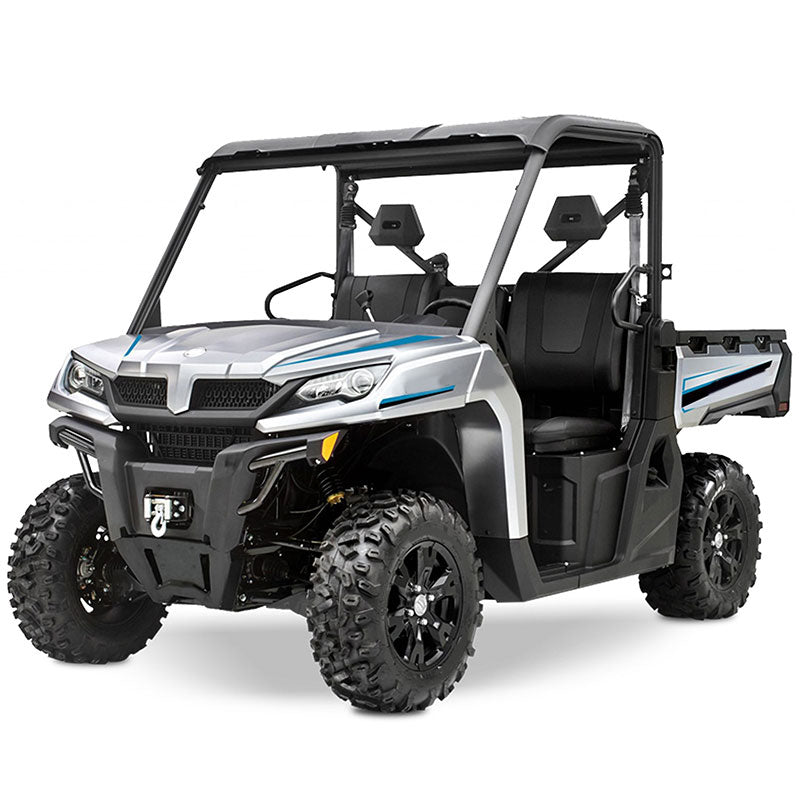
Polaris Xpedition vs Polaris General

The world of side-by-sides has evolved far beyond simple trail machines. Today, they are sophisticated vehicles designed for distinct missions, and no choice exemplifies this modern divergence more than the one between the Polaris Xpedition and the Polaris General. One represents the apex of long-range, crew-carrying capability; the other, the pinnacle of sport-infused versatility.
This isn't just a comparison of specs—it’s a fundamental question of purpose. Are you building a mobile basecamp or seeking the ultimate adrenaline-fueled workhorse? Let's decode this critical decision.
Detailed Specifications Comparison
|
Category |
Polaris Xpedition |
Polaris General |
Winner For |
|
PRICE (Starting MSRP) |
$34,999 - $44,999+ |
$22,999 - $29,999+ |
Budget: General |
|
SEATING CAPACITY |
4-6 adults (model dependent) |
2-4 adults (model dependent) |
Crew Size: Xpedition |
|
ENGINE |
ProStar 1000cc (torque-tuned) |
ProStar 1000cc (HP-tuned) |
Low-End Power: Xpedition |
|
HORSEPOWER/TORQUE |
~110 HP / High torque focus |
~110+ HP / High HP focus |
Heavy Loads: Xpedition |
|
SUSPENSION TRAVEL |
16"+ (Plush, load-capable) |
14-16" (Performance-tuned) |
Comfort Loaded: Xpedition |
|
GROUND CLEARANCE |
15-17" (Extreme) |
13-14" (High) |
Rough Terrain: Xpedition |
|
PAYLOAD CAPACITY |
Up to 2,500 lbs (Game-changing) |
1,000 - 1,500 lbs (Class-leading) |
Work/Hauling: Xpedition |
|
TOWING CAPACITY |
Up to 3,000 lbs |
1,500 - 2,000 lbs |
Heavy Towing: Xpedition |
|
BED CAPACITY |
Large integrated bed |
Standard SxS bed |
Gear/Game: Xpedition |
|
WHEELBASE |
Longer (125-144") |
Shorter (90-124") |
Stability: Xpedition |
|
WEIGHT |
Heavier (2,500-3,000+ lbs) |
Lighter (1,500-1,900 lbs) |
Smooth Ride: Xpedition |
|
CAB FEATURES |
Full cab, doors, available factory heat/AC |
Open cockpit, add-on cab options |
All-Weather Comfort: Xpedition |
|
Extensive integrated storage |
Standard storage + add-ons |
Organization: Xpedition |
|
|
PRIMARY TERRAIN |
Extreme backcountry, overlanding, worksites |
Trails, dunes, recreational areas, farms |
Expeditions: Xpedition |
|
FUEL CAPACITY |
12-14.5 gallons |
9.5-12 gallons |
Range: Xpedition |
Core Philosophies: Basecamp vs. Sports Car
At their heart, these machines are built from entirely different blueprints.
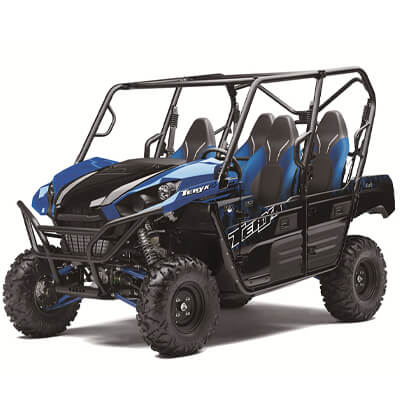
The Polaris Xpedition is engineered as an "Ultimate Multi-Passenger Utility & Adventure Platform." It emerges not as an incremental upgrade but as a new vehicle class altogether. Imagine a fusion of a heavy-duty truck's capability with an overlander's spirit, shrunk to trail width. Every component, from its full cab structure to its massively fortified chassis, is designed for one goal: to transport people and their world deep into the backcountry, comfortably and reliably, for days on end.
In contrast, the Polaris General stands as the "Premier Performance & Recreation Crossover." It is the evolutionary champion of the sport-utility segment Polaris itself defined. The General starts with a performance DNA—agile, powerful, and thrilling to drive—and brilliantly layers on practical utility. It’s the off-road equivalent of a high-performance truck: capable of hard work but delivering a grin with every shift of the throttle.
By the Numbers: A Tale of Two Capabilities
A glance at the key specifications reveals the stark contrast in their engineering priorities.
Where the Polaris General offers respectable and class-competitive payloads of 1,000 to 1,500 pounds, the Polaris Xpedition redefines the benchmark with a staggering up to 2,500 pound payload. This isn't just an improvement; it's a paradigm shift. It means you can load four adults, a full cooler, camping gear for a weekend, and a quartered elk without a second thought. Similarly, while the General can tow a respectable 1,500-2,000 lbs, the Xpedition’s 3,000-pound towing capacity puts it in league with full-sized pickups, capable of hauling a large trailer, a pair of ATVs, or serious construction equipment deep into a job site.
This capability comes from a chassis and suspension built for control under load. The Xpedition boasts extreme ground clearance (15-17 inches) and very long, plush suspension travel (16+ inches), often with adaptive damping on high-end models like the ADV. It uses every bit of its larger footprint and weight to provide a stable, confident, and incredibly smooth ride, even when fully laden.
The General fights back with agility. Its lower weight and shorter wheelbase (on two- and four-seat models) translate to quicker steering, easier maneuverability on tight, technical trails, and a more playful feel. Its 14-16 inches of performance-tuned suspension is designed for handling precision and aggression, not just comfort. While both share variants of the legendary ProStar 1000cc engine, the tuning diverges: the Xpedition’s is optimized for low-end torque to move massive weight, while the General’s chases higher horsepower for acceleration and top speed.

Design & Experience: Fortress vs. Open Cockpit
This philosophical divide is physically apparent.
Sliding behind the wheel of an Xpedition NorthStar or ADV is akin to entering a specialized off-road cab. Factory-installed full doors, windows, climate control (heat and AC), and a premium audio system are available. It’s a sealed, protected environment meant to keep dust, weather, and noise at bay, transforming a grueling expedition into a comfortable journey. The interior is designed with storage, legroom, and user-friendly controls for all passengers.
The General, even in its premium trim, embraces the traditional side-by-side ethos of open-air engagement. The wind, the smells, the sounds of the trail are all part of the experience. While you can add excellent aftermarket or factory cab kits, the starting point is a performance cockpit—sport-oriented seats, intuitive controls placed for the driver, and an atmosphere that feels connected to the terrain. Its design prioritizes sightlines for aggressive driving and a sense of freedom.
The Decision Matrix: Who Is Each Machine For?
Your ideal choice becomes clear when filtered through intended use.
Choose the Polaris Xpedition if your life revolves around:
• Crew-Based Work: You need to bring a team of 4-6 to a remote site with all their tools and materials.
• Serious Overlanding: Your adventures are multi-day expeditions requiring you to carry shelter, food, water, and recovery gear without towing a dedicated trailer.
• Hunting & Rugged Exploration: You require the payload for game, camping gear, and the towing capacity for specialized equipment, all while needing a quiet, enclosed cab to avoid spooking wildlife.
• Ultimate All-Weather Utility: You operate in mud, rain, snow, or dust and value a protected, climate-controlled environment above all else.

Choose the Polaris General if your passion aligns with:
• Performance Recreation: Your weekends are spent chasing the thrill of winding trails, dune climbs, and technical rock sections where agility is king.
• Versatile Day Trips: You want a machine for two or four that can tackle a hard morning of ranch work and an afternoon of exhilarating trail riding without compromise.
• The "Do-It-All" Machine: You need one vehicle that can check the boxes for light hauling, property maintenance, and weekend fun, with a strong bias towards driving enjoyment.
• Tighter Trails & Budgets: Your riding areas include narrow, forested paths, or your investment ceiling aligns with the General’s significantly lower starting price point.
Conclusion: A Question of Priority
Here at StarknightMT, we believe your UTV should mirror your mission. Whether you’re drawn to the trail-conquering, gear-hauling mastery of the Polaris Xpedition or the agile, grin-inducing versatility of the Polaris General, one truth remains: the best UTV is the one that aligns with your ambition.
The Polaris Xpedition is the uncompromising tool for ultimate capability. It is for those whose adventures or work are defined by scale—scale of cargo, scale of distance, scale of crew. It sacrifices outright sportiness to achieve a level of utility and comfort previously unseen in the sector. It is not just a vehicle; it’s a mobile hub.
The Polaris General remains the benchmark for thrilling versatility. It is for the enthusiast who refuses to choose between hard work and hard play, and who believes the journey should be as exhilarating as the destination. It proves that utility doesn’t have to be boring.
In the end, your terrain, your passengers, and your payload will write the answer. For carrying the world, choose the Xpedition. For chasing the horizon with spirit, the General awaits.
FAQs
Q1: Do you have to wear a helmet in a Polaris XPedition?
A1: Not always. There is no nationwide rule that requires helmets in a Polaris XPedition. Helmet requirements depend on state and local laws, where you’re riding, and the rider’s age.
Q2: Is the Polaris XPEDITION good for overlanding?
A2: Yes — the Polaris XPEDITION is purpose-built for overlanding. It’s one of the few side-by-sides designed specifically for multi-day, self-supported off-road travel rather than just trail riding or work use.
Q3: How many miles will a Polaris General 1000 last?
A3: There isn’t a single fixed number, but with good maintenance and normal use, a Polaris General 1000 can reliably go 10,000 miles or more over its lifetime. Many owners report 5,000–15,000+ miles before major overhauls are needed, depending on how hard it’s used and how well it’s taken care of.
Read More:
The Ultimate UTV Gift Guide: Perfect Side-by-Side Gift Ideas for Every Enthusiast
The Ultimate UTV Windshield Buyer’s Guide
The Ultimate UTV Pre-Ride Inspection Checklist
Image source:Polaris


Leave a comment