

Polaris RZR 1000 Check Engine Light Codes

If your Polaris RZR 1000 is showing a check engine light, the best way to figure out what it is is to read the SPN/FMI code right on the dash. Polaris uses its own on-board diagnostic display format, and it can tell you a lot without having to get any extra scanner accessories.
The trick is knowing which codes are serious (or that you should stop and diagnose right away) and which ones are belt or wiring-related. At StarknightMT, we see this a lot: riders get a misfire-style code right after a belt service and immediately blame their plugs or coils.
Not every check engine light on a RZR means catastrophe. While some might point to genuine sensor or electrical failure, a lot of the time, it’s the belt throwing a false-misfire fit because the clutches are dirty.
The point of this guide is to help you sort codes out in the right order.
Polaris RZR 1000 High-Frequency Fault Codes at a Glance
| SPN/ FMI | Component Impacted | Fault Nature | Common Symptom | Urgency | Common Root Cause | Primary DIY Fix | Best Tool |
|---|---|---|---|---|---|---|---|
| 65590 / 65591 / 65592 | Misfire / powertrain | Often shows as misfire after belt issues | Stumble, limp feel, CEL after belt service | Medium | Belt slip, dirty sheaves, flat-spotted belt | Inspect belt and clutches before ignition parts | Dash code screen + clutch inspection |
| 102 FMI 2/3/4/7/10 | T-MAP / MAP side | Signal erratic, high, low, or mechanical response issue | Poor idle, hesitation, random CEL | Medium | Sensor contamination, damaged harness, bad connector | Clean sensor, wiggle-test harness, repair wiring | Dash code screen + multimeter |
| 105 FMI 2/3/4/10/15 | T-MAP / intake temp side | Intake temp signal problem | Hard starts, weird fueling, CEL | Medium | T-MAP wiring or sensor problem | Inspect connector and wiring, then sensor | Dash code screen + multimeter |
| 520344 FMI 15 / 17 | Adaptive fuel correction / O2-related trim | Rich or lean correction fault family | Rough idle, power loss, fuel smell, lean stumble | Medium to high | Dirty filter, intake leak, O2 issue, fuel delivery issue | Inspect filter, boots, O2 wiring, verify fuel pressure | Dash screen + fuel-pressure test |
| 168 FMI 3 / 4 | Battery / charging system | Voltage too high or too low | Weak EPS, dim lights, erratic electronics, hard start | High | Loose terminals, bad grounds, failing regulator | Clean/tighten cables and test charging voltage | Dash screen + voltmeter |
| 520280 / 520281 / 520283 / 520284 | Throttle body control | Limp-home or adaptation fault family | Limp mode, poor throttle response | High | Throttle-body issue, connector fault, adaptation failure | Inspect throttle body and wiring, limit riding | Dash screen + advanced scan / dealer tool |
Polaris’ own manuals show that the dash display reports code count, SPN, and FMI, and that active codes may disappear when the key is turned off unless the fault is still present.
That means if the light comes on in the woods, take a photo before you cycle the key and accidentally wipe your own trail of breadcrumbs.

How to Read the Code Before You Start “Fixing” Things
With most RZR 1000-family UTVs with a digital display, you turn the key on, enter the diagnostics/engine code menu, and it displays three values:
● How many active codes are present
● The SPN (suspect parameter)
● The FMI (failure mode)
Older non-digital Polaris vehicles typically use blink codes, but the RZR XP 1000 has used a digital display since launch, and newer Pro models continue the same basic logic through updated display systems.
This means that the same check engine light can point to a completely different repair path depending on the SPN/FMI pair. “Engine light on” by itself is useless.
However, for example, SPN 168 FMI 4 is a low-voltage problem, SPN 102 FMI 3 is a MAP-signal-high problem, and while 65591 is often treated like a misfire, in real RZR life, it can pop up right when you change out your belt because the drivetrain isn’t sure what’s happening.
Category 1: The “Ghost” Misfire Codes
The trio most owners know by heart are 65590, 65591, and 65592.
These are classified as “cylinder misfire” and “mechanical non-response behavior.” They usually come up because of a belt slip, clutch contamination, or a belt that wasn’t installed or broken in correctly.
Start with the CVT when you see one of these codes.
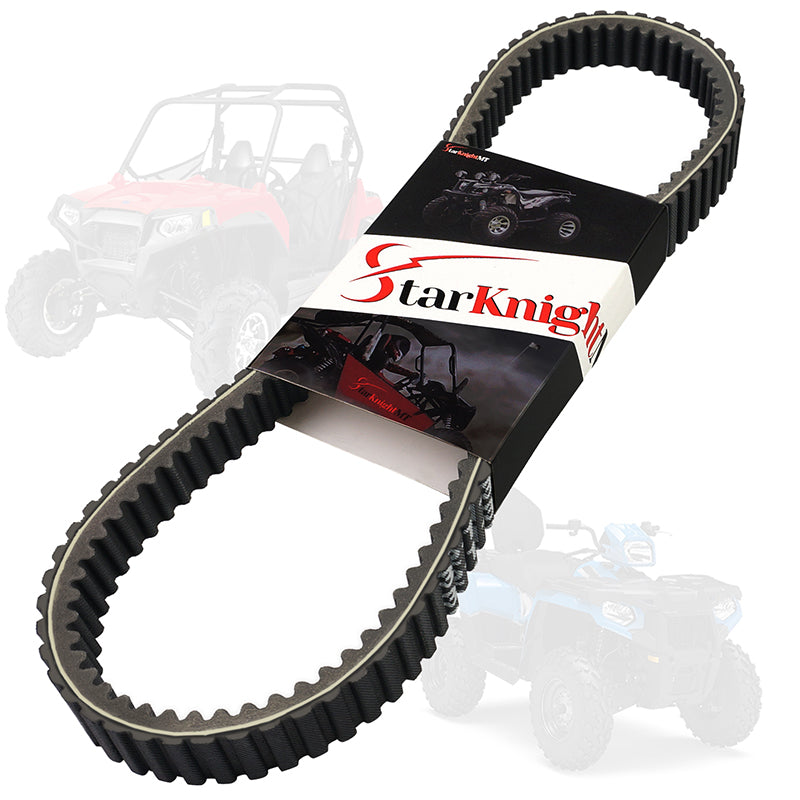
Pull the cover, inspect the belt for glazing, chunking, cord exposure, or flat spots, and clean the clutch sheaves. Leftover belt fibers or rubber from the old belt can keep the new one from seating right. You can use Scotch-Brite on sheaves and soap and water to clean your belt if that’s the case.
If the secondary rollers or clutch action look out of shape, you can deal with that next before you look at injectors. Only if the belt side checks out clean should you move on to plugs, coils, injector balance, and true cylinder-misfire diagnosis.
Category 2: T-MAP Wiring and Sensor Faults
Most RZR 1000-family manuals say that SPN 102 covers the manifold pressure side of the T-MAP sensor and SPN 105 covers the intake-air-temperature side of that same sensor assembly.
Polaris lists failure modes here that include voltage high, voltage low, erratic data, abnormal rate of change, and “mechanical system not responding or out of adjustment,” which is Polaris-speak for “something in this circuit is acting wrong, and the ECU knows it.”
These faults are often wiring-related before they’re sensor-related.
Many companies sell aftermarket T-MAP pigtail repair kits for Polaris EFI engines because vibration can wear out the wiring near the connector, causing intermittent issues.
That’s where the old-school wiggle test comes into play. With your Polaris idling, gently move the connector and nearby harness and watch for a stumble or code behavior change.
If the fault reacts to movement, you probably have a wiring problem. If the connector is dirty, clean it. If the harness is damaged, you’ll have to repair or replace the pigtail.

Category 3: Fuel Trim and O2 Lean/Rich Conditions
SPN 520344 points you toward the air-fuel side of the problem.
Polaris manuals label it as “Adaptive Fuel Correction Bank 1,” with FMI variants that indicate whether the correction is above or below the normal range.
FMI 15 often pops up because of a dirty air filter or other airflow-side issue, while FMI 17 usually pops up because you’re getting weak fuel delivery.
Both can also be influenced by O2-wiring problems.
For this issue, start with the easy stuff:
● Inspect the air filter
● Check the intake boots for cracks or loose clamps
● Look for exhaust leaks near the O2 sensor
If your Polaris is surging or stumbling, check the O2 harness and connector too. Then verify fuel pressure, which is set to 58 PSI.
Category 4: Charging System Spikes and Drops
SPN 168 is the electrical stability code family.
FMI 3 is voltage above normal / shorted to a high source, and FMI 4 is voltage below normal / shorted to a low source, according to Polaris.
In plain English, your machine is either overcharging, undercharging, or the ECU thinks the system voltage is unstable enough to complain about it.
The symptoms split in two directions:
● Undercharging: Often looks like weak starts, dimming lights, flaky EPS behavior, or a wonky battery.
● Overcharging: Typically presents as weird electronic behavior, a hot battery smell, bulb failures, or ultra-high voltage readings.
The first checks should be your battery terminals, main grounds, and the connections under the seat. Clean them and tighten them. Then check voltage at the battery with the engine off, at idle, and at raised RPM.
If the cables and grounds are clean and the voltage is still unstable, look at the regulator/rectifier.
Model-Year and Trim Differences
One thing I’ve learned as a long-time rider at StarknightMT is that not all RZR 1000 family models present diagnostics the same way, and not every code table is identical across generations.
Here’s a look at what you can expect based on the year:
| Model Family | Cluster / Display Style | O2 / Fuel-Code Behavior | Throttle System | Key Vulnerability |
|---|---|---|---|---|
| 2014–2018 XP 1000 / XP Turbo | Classic digital cluster SPN/FMI readout | Older adaptive fuel correction wording | Electronic throttle, earlier code family | Belt-related false misfire complaints |
| 2019–2021 XP Turbo / Turbo S | Same basic SPN/FMI workflow | More explicit emissions / O2 relationships | More throttle-body management codes appear | Charging and throttle plausibility faults |
| 2022–2024 Trail / Trail S / XP 1000 family | Updated manual families, same logic | Wider O2 / wideband references in some manuals | Modern ETC logic | Intake / fueling / O2 crossover faults |
| 2024–2026+ Next-Gen Platform (Pro XP / Pro R / Turbo R) | Newer display and Ride Command-integrated workflows, expanded module communication | More layered fuel, sensor, and subsystem plausibility monitoring across the newer electrical bus system | Ultra-sensitive ETC logic with stronger limp-home strategy and tighter throttle-body adaption monitorting | ETC faults, module communication instability, sensitivity under voltage or connector issues |

Limp Mode Across Generations
“Limp mode” is Polaris trying to save your engine or throttle system from you.
In newer manuals, codes like 520280 and related throttle-body-control families clearly indicate that some faults are urgent and should be looked at right away.
If your throttle response is limited, your Polaris won’t rev properly.
Real-World Action Plans by Scenario
● If you get a misfire code right after a belt swap, start by cleaning the belt and clutch before touching ignition.
● If you get a 520344 fuel-correction code with rough idle, inspect the filter, intake tract, O2 wiring, and fuel pressure in that order.
● If you get SPN 168, bring out the voltmeter and the wire brush.
● If you get a throttle-body limp-home style fault on a newer Pro XP / Turbo R / Pro R, take it home and get it somewhere to get looked at.
Final Thoughts
The best way to handle a Polaris RZR 1000 check engine light is to read the exact code on the dash, figure out what “fault” family it belongs to, and troubleshoot the most likely cause first.
Don’t ignore the light or jump straight to the most expensive part you can think of. The best RZR diagnostic tool is still the right code, the right order, and enough patience not to panic-buy parts.
FAQs
Q1: Can I read Polaris RZR 1000 check engine codes without a scan tool?
A1: Yes. Most RZR 1000-family UTVs display active diagnostic information on the dash using the SPN / FMI format. No scanner necessary!
Q2: Why did my RZR throw a misfire code right after a belt change?
A2: Because you can often get 65590 / 65591 / 65592 when the new belt slips, the sheaves are dirty, or the belt wasn’t installed and broken in correctly.
Q3: Will the check engine light clear itself after I fix the fault?
A3: It depends. Some faults will clear after enough engine revolutions or normal operation, but others may require dealer-level software. If your code hasn’t gone away after regular use, get in touch with a local mechanic.
Read More:
The Ultimate UTV Pre-Ride Inspection Checklist
Polaris RZR Pro XP Trail Setup — 6 Mods You Need
Can-Am Maverick X3 X RS vs Polaris RZR XP Turbo S
Image source:Polaris


Leave a comment