

How to Choose the Right UTV for Your Child

Image source:Peg Perego
When choosing the right kids' UTV, you want to think about three things: your child’s age and size, safety controls built into the UTV, and where they’re planning on riding.
If the vehicle is too big, too fast, or too abrupt in the throttle, it’s the wrong UTV, no matter how cool it looks. As a rider at StarknightMT, I’d rather see a kid in a smaller, slower UTV they can control confidently than one they can “grow into” that scares them or puts them behind the curve on basic skills.
Kids learn confidence through control. If they can reach the pedals, steer without stretching, and understand exactly how the vehicle responds, they build better habits early.
Best Kids UTVs Comparison Table
| Model | Recommended Age | Engine or Motor | Top Speed | Safety Features | Suspension | Starting MSRP ~ |
|---|---|---|---|---|---|---|
| Peg Perego Polaris RZR 900 | 3-8 | 12V electric | 2.5-5 mph | Seat belts, two-speed lockout, parental control by supervision | Toy-grade | ~ $500 |
| 24V Can-Am Maverick X3 Ride-On | 4-8 | 24V electric | 4-5 mph | Parent remote, seat belt, soft start, lights | Toy-grade | ~ $700 |
| Polaris Ranger 150 EFI | 8-10+ | 150cc EFI gas | 16 mph; 29 mph unrestricted | Youth Ride Control, geofencing, pin code start, helmet aware, seat belt interlock | Up to 6 inches travel | ~ $6,500 |
| Polaris RZR 200 EFI | 8-10+ | 180cc EFI gas | 16 mph; 29 mph unrestricted | Youth Ride Control, geofencing, pin code start, helmet aware, safety nets | 7 inches in front / 6 inches in rear | ~ $7,000 |
| SSR SRU170RS | 12-14+ | 169cc EFI gas | High 20s to low 30s | Adjustable throttle stop, seat belts, cage | Dual A-arm front / swingarm rear | ~ $4,500 |
| Hisun Strike 250R | 12-14+ | 250cc EFI gas | ~ 45 mph | Full doors, roof, windshield, parental safety features | Independent dual A-arm | ~$4,699 |
Best Kids UTVs for Ages 6–8
For ages 6–8, I wouldn’t jump into a true gas youth side-by-side unless the manufacturer explicitly says that age range and the child clearly fits the UTV.
Most real youth UTVs from major OEMs start at 10+, not 6 or 8. So at this age, the best move is usually an electric ride-on UTV-style vehicle that they can ride around on the lawn or a short gravel drive.
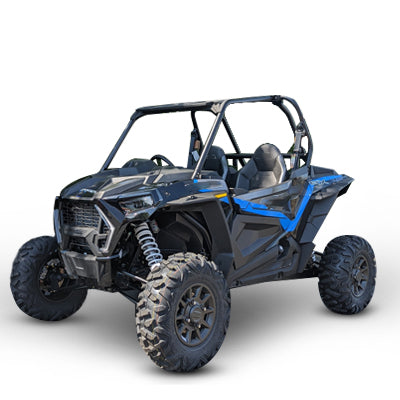
Peg Perego Polaris RZR 900
This is probably the best recommendation in the youngest group.
Not only is it a toy-grade electric ride-on, but it’s made by one of the best manufacturers in the industry.
You get the familiar Polaris branding with a small footprint and a low speed range for actual beginners. If your kid is still learning to steer, brake, and develop basic spatial awareness, this is the perfect UTV.
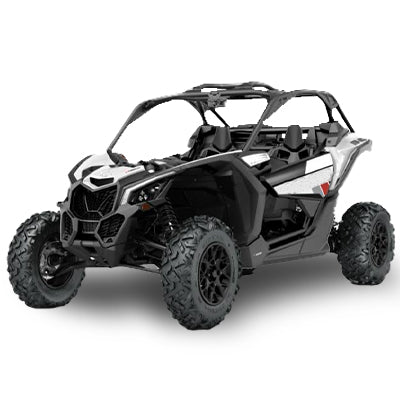
24V Can-Am Maverick X3 Ride-On
Another solid choice from a major UTV manufacturer, the X3 Ride-On is great for kids who are still young but already comfortable with steering and braking. The 24V setup gives them a little more punch than the smaller 12V options you see on the market, but it’s still in toy territory, which is where you want to be for this age group.
If I were choosing one for a six- or seven-year-old, I’d care less about branding and more about parent remote control and safety.

Image source:Polaris
Best Kids UTVs for Ages 8–12
By the time your child is 8, 9, 10, or 11, you might not be asking “can they steer?” anymore, but how can they handle terrain and speed without panicking or getting sloppy?
Most kids in this age bracket still won’t be in adult-size machines, but rather a stepped-up youth platform with decent safety controls.
Polaris Ranger 150 EFI
If your child knows how to ride and wants something they can play around in on your property, the Polaris Ranger 150 EFI is an incredible choice. It has legitimate youth engineering with adjustable seat and steering wheel fitment, proper parental speed controls, geofencing, and electronic fuel injection.
As a StarknightMT rider, I like this one for families who have ranch property or open land and want a mellower, more predictable UTV for their child.
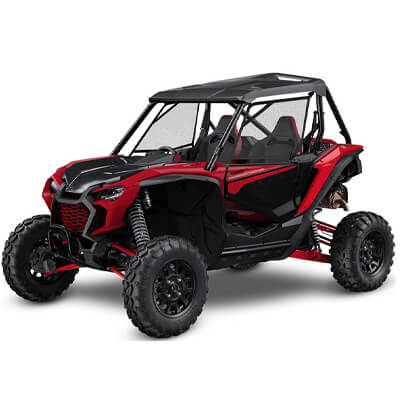
Polaris RZR 200 EFI
The RZR 200 EFI feels the most like a scaled-down version of a real side-by-side. It has the same family-friendly safety tech as the Ranger 150, but the suspension and overall feel are more trail-focused. If your kid is already showing good judgment, this is the premium benchmark for the category.
If you’ve got rougher property or trails you like to hit on the weekend, this is an excellent step up.

Image source:SSRMotorsports
Best Kids UTVs for Ages 12–14+
When your child gets into their pre-teens, you might be tempted to jump them up to a regular UTV. I wouldn’t.
A 12-, 13-, or even 14-year-old may be more skilled, but that doesn’t automatically mean they belong in an adult UTV that exceeds their size or the manufacturer’s intended age and fitment.
I’d recommend going for a more advanced youth platform.
SSR SRU170RS
For older kids who’ve outgrown smaller youth cockpits but still need a controlled platform, the SSR is an excellent entry-level side-by-side. The longer wheelbase gives taller kids more room, and with a smaller 169cc engine, it’s a safer, more beginner-friendly ride. Plus, it has a roll cage and adjustable speed control for added safety.
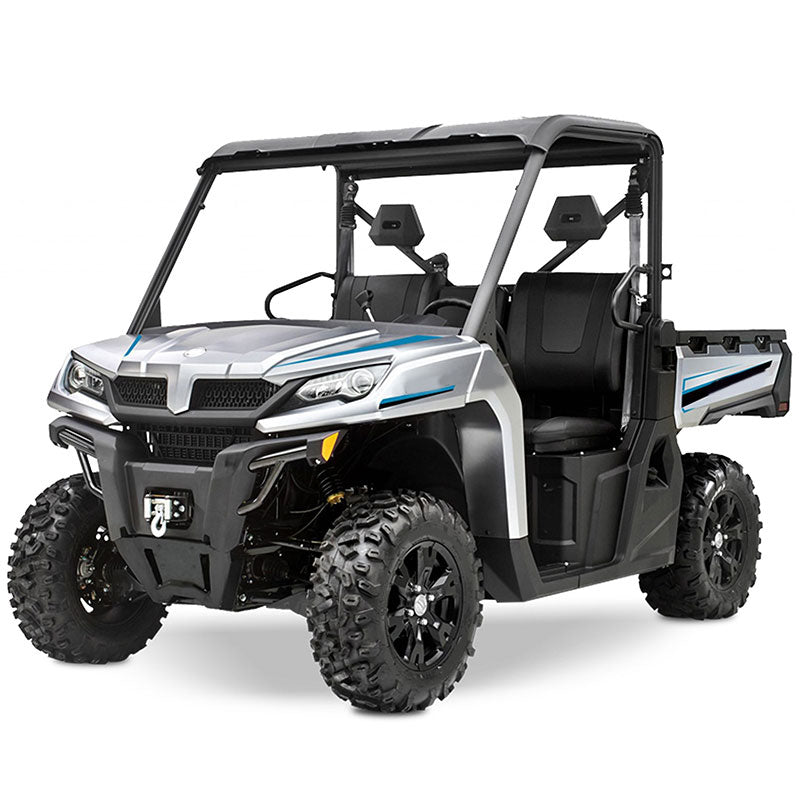
Hisun Strike 250R
If your child is on the older end of this range, has experience, and rides under close supervision, the Strike 250R is one of the more serious value picks. It comes with essential UTV equipment such as full doors, a roof, a windshield, and an independent front suspension, which makes it feel more complete right out of the gate.
I wouldn’t recommend this pick for a nervous beginner, but for an experienced younger driver who’s sticking within youth-oriented equipment rather than jumping straight into an adult platform, it has plenty of torque and speed.

Image source:HISUN
Premium vs Budget Kids UTVs
A cheaper UTV can absolutely work. But what the extra money usually buys is not just a brand name. It buys better speed management, better fitment, better suspension, better safety monitoring, and better resale value later.
That’s why we’re big fans of premium youth UTVs like the Polaris RZR 200. It isn’t cheap, but it’s much easier to trust because the safety systems are more robust and the ride quality is more consistent.
A budget toy model, on the other hand, is fine if your child is younger and you know you’re not keeping it for long.
What to Look for When Buying a Kids UTV
Safety Features
Safety first! There are a few things to look for in youth UTVs, including:
- Seat belts
- Nets
- Roll cages
- Speed limiters
- Remote shutoff systems
- Parental controls
All of these are far more important than a number on the spec sheet. A 29 mph machine with good speed control is safer than a slower machine with no meaningful oversight.
Proper Size and Ergonomics
If your child can’t comfortably reach the wheel, pedals, and switches without stretching, the machine is too big. End of story.
Engine Size and Power Delivery
Smooth power > big power. That’s why EFI youth UTVs tend to feel easier for kids to control than abrupt throttle setups.
Suspension and Ride Stability
If your child is riding on rough terrain, suspension quality is important. It’s part of the predictability factor. Kids get tired and overwhelmed more quickly when the ride is rough.
Terrain Compatibility
Get the right UTV for where your child will be riding.
If you’re in the suburbs and they’re riding around on your lawn or the road by your house, an electric ride-on can do the trick. For lighter trails or more aggressive off-road terrain, they’ll need something with better suspension and capable safety controls.

Image source:Polaris
Kids UTV Safety and Supervision Tips
Keeping your kids safe on their UTV means helping them build the right habits from day one.
Before every ride, take five minutes for a quick walkaround inspection—consistently check the tire pressure, ensure the brakes bite firmly, and verify that steering linkages, drive belts, battery connections, and safety restraints are all secure.
Beyond the machine, proper gear is non-negotiable: make sure they are always buckled into a well-fitted helmet, and never let them ride without close adult supervision. It’s easy to treat "they've been driving great lately" as an excuse to skip the "boring" safety protocols, but true trail safety relies on consistency.
Most importantly, remember a golden rule of youth riding: don’t buy the UTV your child might grow into two years from now. Buy the one that fits their physical size and matches their confidence levels right now.
FAQs
Q1: What age should a child be for a real gas youth UTV?
A1: Most true youth side-by-sides start around age 10+. That’s a pretty common manufacturer threshold for 150cc–200cc youth UTVs.
Q2: Should I buy a bigger UTV so my child can grow into it?
A2: No. Fit matters now. If your child can’t comfortably reach the controls and sit properly in the seat, the UTV is too big.
Q3: Are electric ride-on UTVs okay for younger kids?
A3: Absolutely. Electric ride-on UTV-style vehicles are great for kids 6-8, as long as they are used on flat ground and within the stated weight limits.
Q4: What size UTV is right for a 10-year-old?
A4: For a 10-year-old, a 150cc to 200cc youth UTV is usually the sweet spot. It offers enough power for the trails without overpowering a young rider who is still mastering control and steering.
Q5: Can kids drive UTVs on public roads?
A5: Almost always no. In most states and regions, public road use requires a valid driver’s license. Youth UTVs are strictly engineered and legally designated for off-road trails and private property use only.
Read More
Multi-UTV Ownership: Common Issues & Fixes


Leave a comment